XXIV- The human sin of wanting
The hubby and I had an interesting discussion recently about AI.
First of all, I hate that the thieving fraud currently being propped up by tech bros and grifters alike was ever given the moniker “AI.” It’s machine learning, at best. It’s clever mimicry. It’s collage on a scale no human can compete with. It acts like a person in the same way two headlights and a radiator grill on a car act like a face to our pattern-seeking brains.
It is not artificial intelligence. It doesn’t think. It doesn’t reason. It obediently recombines and spits out the words and images and patterns it’s been fed, but it doesn’t understand them.
It doesn’t understand them.
Yet.
So, the question becomes…when does machine learning turn into true artificial intelligence? Is it a slow, imperceptible shift, or will it happen all at once? How do we differentiate extremely clever mimicry from sentience? If a machine says it has thoughts and feelings, is that because it does, or because it’s been trained on data that indicates that’s what the asker wants to hear? What do we do if—when—the mimicry gets so good that it starts functioning exactly like sentience? Does the question even matter anymore, if and when that happens?
I guess the question then becomes, did we ever actually stop being really clever apes?
#
If anything sets mimicry apart from sentience, it’s wanting.
“What do you want?”
People get asked this all the time. What do you want to eat? What do you want for Christmas? What do you want to do today? What do you want to do when you grow up? What do you want to listen to? What do you want to wear tomorrow?
How do you make characters in a story feel like full, rounded people? You ask what they want. Disney movie protagonists always get an “I want” song for a reason. I want much more than this provincial life. I wanna be where the people are. I just can’t wait to be king. See the line where the sky meets the sea? It calls me. Do you want to build a snowman?
Of course, the danger in wanting is that you might not get it, or once you do get it, you discover you don’t want it anymore. Want crashing into obstacles is arguably the entire basis of interesting fiction.
#
I have to remind myself, frequently, that I’m allowed to have things. That I will not be punished by the universe for daring to want something.
Because, you see, what often happens is I will decide, finally, to do something nice for myself that I don’t do often. I’ll go out. I’ll buy a nice blouse. I’ll eat some ice cream. Then I come home, and something has happened. I forgot some crucial chore. Something got neglected. Something got broken. Somebody got some bad news. It’s always something. A Thing has happened, I was needed, and how dare I be out spending my time frivolously when that was going on? How dare I not be available?
It doesn’t matter that I didn’t know; clearly, I should have checked before I left on my frivolous and entirely unnecessary errand. It doesn’t matter that I don’t treat myself often. Clearly, the fact that I was doing the frivolous, selfish thing in that moment proves I am a terrible, irresponsible person who’s always out buying clothes I don’t need and getting fat.
count me out like sovereigns, payback for the good times…
Like…I know that thinking is disordered as fuck, but knowing that doesn’t make it go away.
#
I always brace myself when I open my email and scroll down to the folder called “queries.”
Usually, there’s nothing new. It’s a relief, honestly, when there’s nothing new. But sometimes there’ll be that little 1 that means I have an unchecked message. There’s that little needle prick of…something.
Not want. We’re long past that on this particular journey.
It used to be I’d have to go into the folder and click the message itself to see whether it’s a rejection or a request. Now, thanks to the quirkiness of Querytracker, all I have to do is open the folder. Rejections are always labeled “query reply” in the email header. Requests are labeled “submission request.” I know at a glance which it is. The needle prick happens before I even open the email.
I open the replies anyway, mostly to make the flag go away, but also to gauge the tone of the form letter.
“Not for me” = “the book is fine, I just didn’t really like it.” Fair enough. You like what you like. An annoying rejection to get when you sent your book to that agent specifically because it fit their manuscript wish list so well, but eh. I love metal, but that doesn’t mean I have to like every metal song that comes out. By far the most common rejection.
“Not a fit for my list” = The weedier version of “not for me,” because you’ll never know whether it means the agent didn’t like your book, or if they weren’t sure they could sell it in the current market, or if they have a book just like it already. None of these are things you can control, so arguably it doesn’t matter, although the data would be nice for future reference. Sometimes I wonder if this phrasing is the agent trying to soften a “not for me” to make it sound like it’s their list that’s the obstacle, not their taste. Pretty common rejection.
“I don’t have the vision” = “as a reader, I’d probably be interested, but I don’t think I could sell it.” At best, a soft compliment: the work is good, they just don’t know where they’d send it. At worst, it reads as them attempting to separate their taste from the job and imply the job comes first—“I do like it, but I can’t sell it”—even though modern agenting has made it so that an agent’s taste kind of is the job. (If the job supercedes taste, why would agents reject books they know are good enough to sell just because they don’t “love” them?)
When this comes as a form response, I assume it’s not that deep. It’s a prettier variation of “not for me.” It’s not one I see as often.
“I didn’t connect/ I didn’t love it” = “not feeling it.” This feels a bit more personal. It means the writing failed to do its job for that one individual, which sucks. “You had one job,” and all. That’s not always a failure on my part…but I’ll never know if it was a failure on my part. Why didn’t they connect? Did I portray my main character poorly… or is that character not one they have much experience with? Did the plot not pull them in because it’s too slow, too fast, too obscure, too boring? Is that particular agent simply not my audience—which happens, no book is ever universally liked—or does the writing need work? This one frustrates me a bit when I get it, because it feels like something I should fix, but logically, I know it rarely has anything to do with me.
Then we get to the terse ones. “I’m going to pass”, “I will not be requesting more”, “I must reject what you’ve sent”, “I am very picky when taking on new clients”, etc. I assume, always, that whatever language is chosen for these form letters is meant with kindness, or at the very least, neutrality. However, the ones worded like this never sound neutral to me. They sound like “your book was not good enough, sorry.” These are the rejections that still feel icky after I’ve closed them, even after all the years I’ve been at this, even though I know better.
No rejection feels good…but language matters. And all this is what you get when you’re lucky enough to get a response at all. Most of the time, you get silence, which can mean anything, everything, and nothing, all at once.
I understand the reasons for that. I don’t even necessarily disagree, and I certainly have no suggestions for a better system.
It still feels bad.
It teaches you not to want.
People talk about their dream agents, and I catch myself shaking my head.
Wanting has played no role in sending queries for me since, like, year five or so. I don’t bank my hope on anyone. I don’t personalize my letters. I don’t perform a connection where none exists, on the slim-to-none chance of sweetening the deal on their end. “Why do you want to work with me/my agency?” feels like a company asking, “Why do you want to work at this company?”, when both interviewer and interviewee know the truthful, selfish, boring answer is “the interviewee needs money.” I want to work with an agent because having an agent is literally the ONLY WAY into traditional publishing.
Don’t make me approach you in a way that feels personal, then turn around and ask me not to take your rejection personally. If the process ever moves beyond Stage 0, then I can contemplate things like compatibility without the fear of having the door slammed in my face the moment I get invested.
Querying a book is a damned numbers game, and you play it knowing there is a very high chance that your number will never come up. You can do everything right and never get chosen. Once you are skilled enough to be in that 10% of queries that merit consideration, it’s all down to chance. Right person, right book, right time, and all you can do is keep throwing darts in the dark and hope all three of those conditions eventually get met.
They might not.
They say it only takes one yes. What they don’t tell you is that every try is a separate dice roll, and if you are not lucky, you will never get that yes. Reality isn’t statistics, where hundreds of tries equals predictable results.
Reality is one person making all the correct choices and never getting the result they want.
Wanting will destroy you in a system you cannot win on your own merit.
#
I still do want, on occasion. When the universe throws an unexpected nibble.
#
I don’t think it was querying that taught me not to want things, though it has certainly done that part of my brain no favors.
I was an odd, shy, quiet kid growing up. I didn’t like talking to people. I didn’t stand up for myself. I was “sensitive.” I cried easily. I didn’t like being noticed. I was good at drawing. I was a decent athlete. I climbed trees. I read a lot. Teachers liked me.
I was never bullied. Well…I was never bullied in the obvious, “push you against your locker, steal your lunch, beat you up after school” way you see on TV.
It was more insidious.
It was the amused looks I’d get after saying something. It was the little verbal jabs. It was the way I was rarely missed when I wasn’t around. It was sarcastic daycare counselors and mean daycare kids. It was a music teacher who, when you lost your lines for a holiday play, scared you into silence by yelling when you tried to tell him, treated you like an idiot for not knowing your lines when it was time, and gave your part to someone else. It was me, a second grader, passing two fifth graders in the hall and one of them saying, “You know talking to yourself means you’re crazy, right?” and laughing. It was the bus driver forgetting your stop and getting annoyed when you finally worked up the courage to remind him. It was being mocked for practicing Taekwondo forms at recess. It was having acne bad enough to make someone do a double-take and shout, “What’s WRONG with your FACE??”
It was being too weird for the cool kids and the wrong kind of weird for the theater kids. It was people looking at me like they couldn’t figure out why I was there. It was never quite feeling unwelcome, but also never quite wanted.
You learn that showing up as yourself is dangerous. You learn to make yourself quiet. You learn to keep your interests to yourself, so you don’t have to constantly defend them. Authenticity invites mockery, confusion, judgment, so you feign indifference. You train yourself to look like you don’t care. Eventually, you train yourself to actually not care…and then you wonder why you can’t care when you know you should.
But you keep the mask, because the inevitable letdown of being known is not worth it. The confusion, criticism, and judgment from others are not worth it. Wanting things will be used against you. Liking things will be used against you. If nobody knows what you want, the world cannot use those things to get to you.
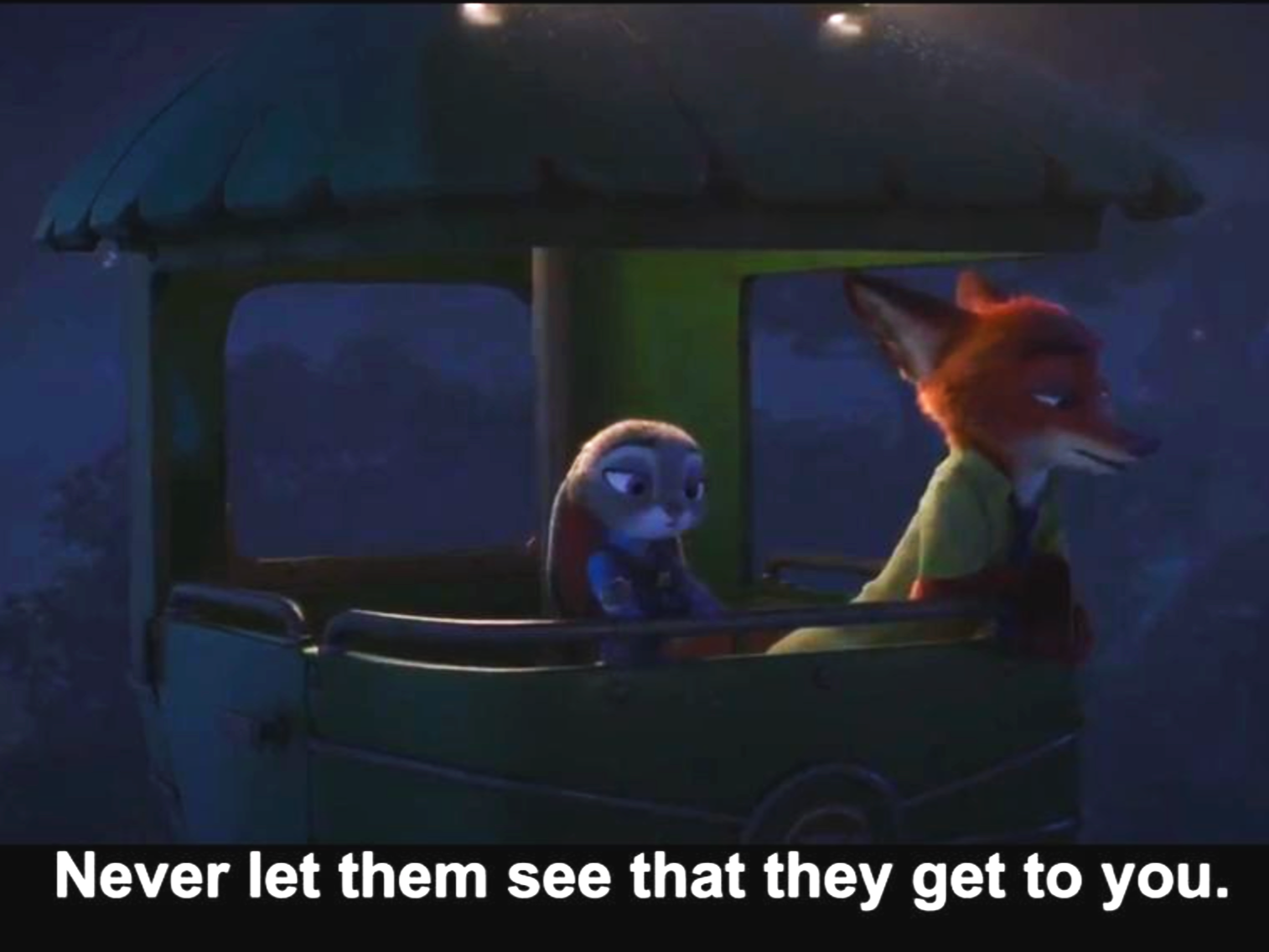
Even as an adult, even after I’ve made the transition between genuinely not caring what people think of me and the freeing realization that most people don’t think of me at all…there’s still the instinct to keep things close to the chest.
#
I admire people who can live with their hearts on their sleeves. Everyone knows who they are. Everyone knows what they want. Those people either truly don’t care who loves or hates them for it, or they’ve just learned to hide it really, really well.
Because wanting and not getting hurts. Wanting and being judged hurts. You get tired of it.
Would that we could all just don a mask and be ourselves.
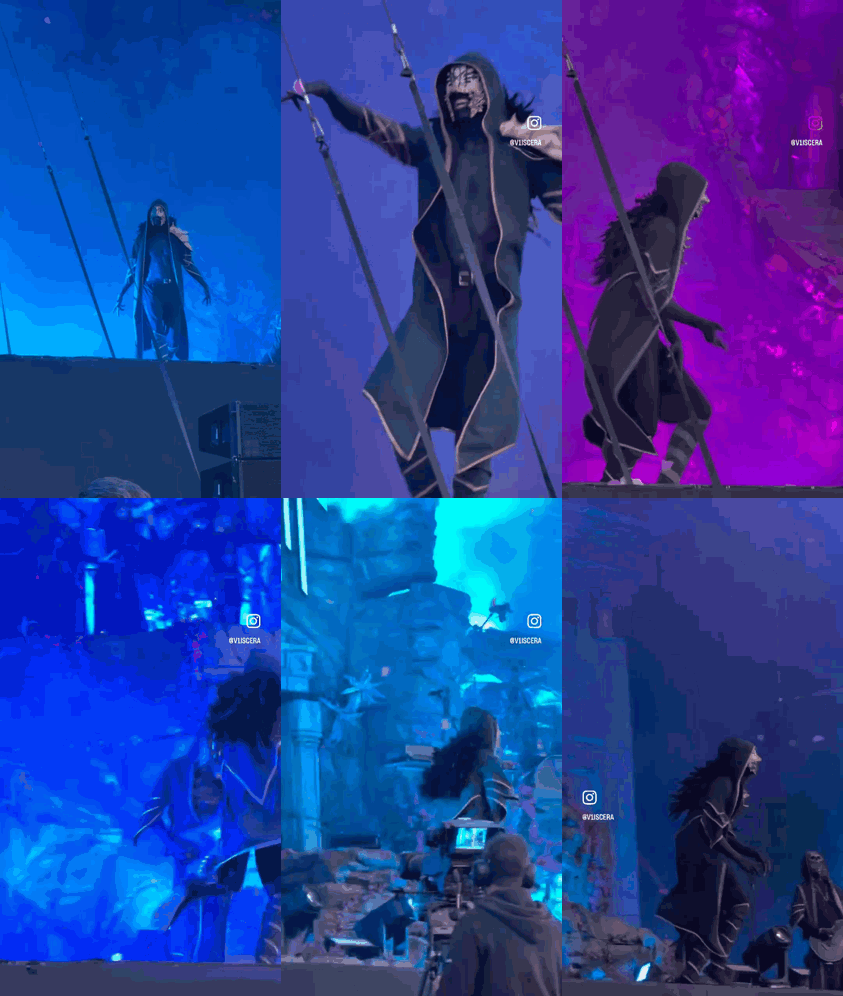
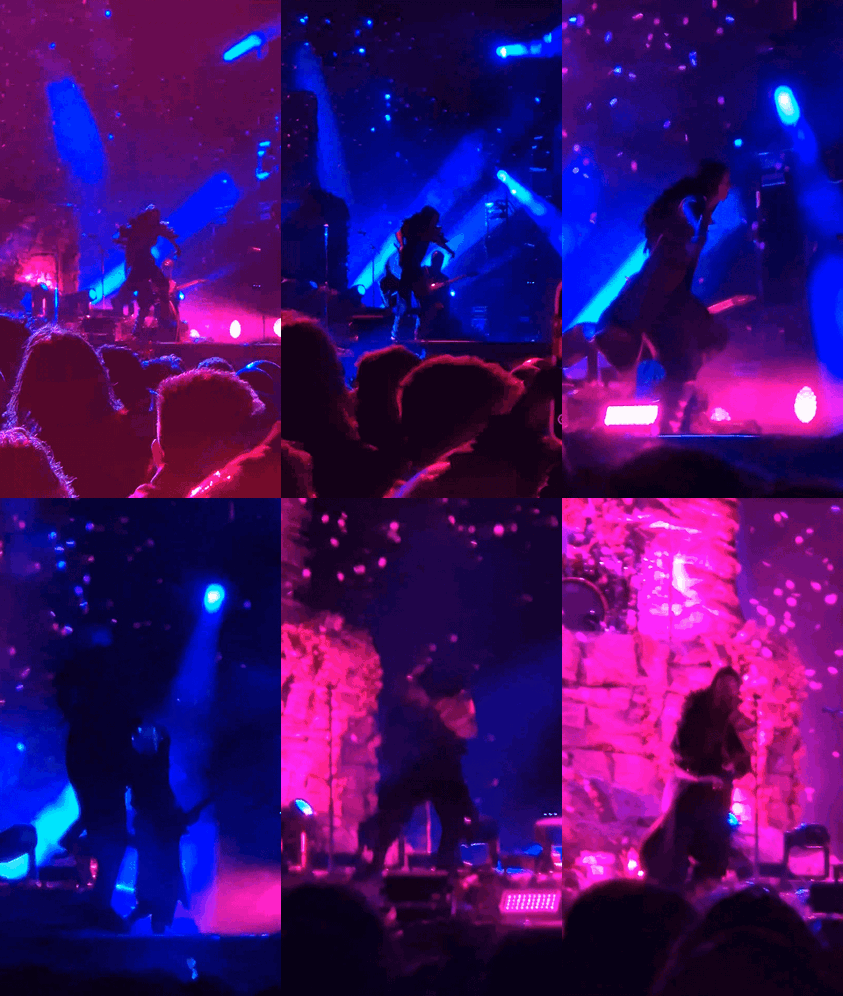
Vessel’s dancing is legendary. It’s unhinged and delightful entirely because of how unhinged it is. He dances like no one is watching.
Vessel also wrote this song, which just celebrated its 1 year anniversary:
count me out like sovereigns, payback for the good times
right foot in the roses, left foot on a landmine
i’m not gonna be there tripping on the grapevine
they can sing the words while I cry into the bassline
wear me out like Prada, devil in my detail
i swear it's getting harder even just to exhale
backed up into corners, bitter in the lens
i’m sick of trying to hide it every time thеy take mine…
#
If anything sets mimicry apart from sentience, it’s wanting.
Too bad we humans make wanting such a perilous thing.
(Sleep Token was never going to win that Grammy, but man, do they deserve one.)